It starts with operations, not the terminal
The most common mistake when setting up attendance tracking is starting with the choice of hardware. The terminal is the cheapest and easiest part of the system to replace. What is difficult to change are the rules: how overtime is calculated, from what time night shift allowances apply, what happens if someone forgets to clock out, who is authorised to approve corrections, and how this affects payroll.
That is why, on the first call, we ask four things: how many employees you have and what their working schedule is, how many entrances and buildings there are, whether agency staff or external contractors visit, and which payroll software you use. From this, a proposal is drawn up. The terminal brand is secondary.
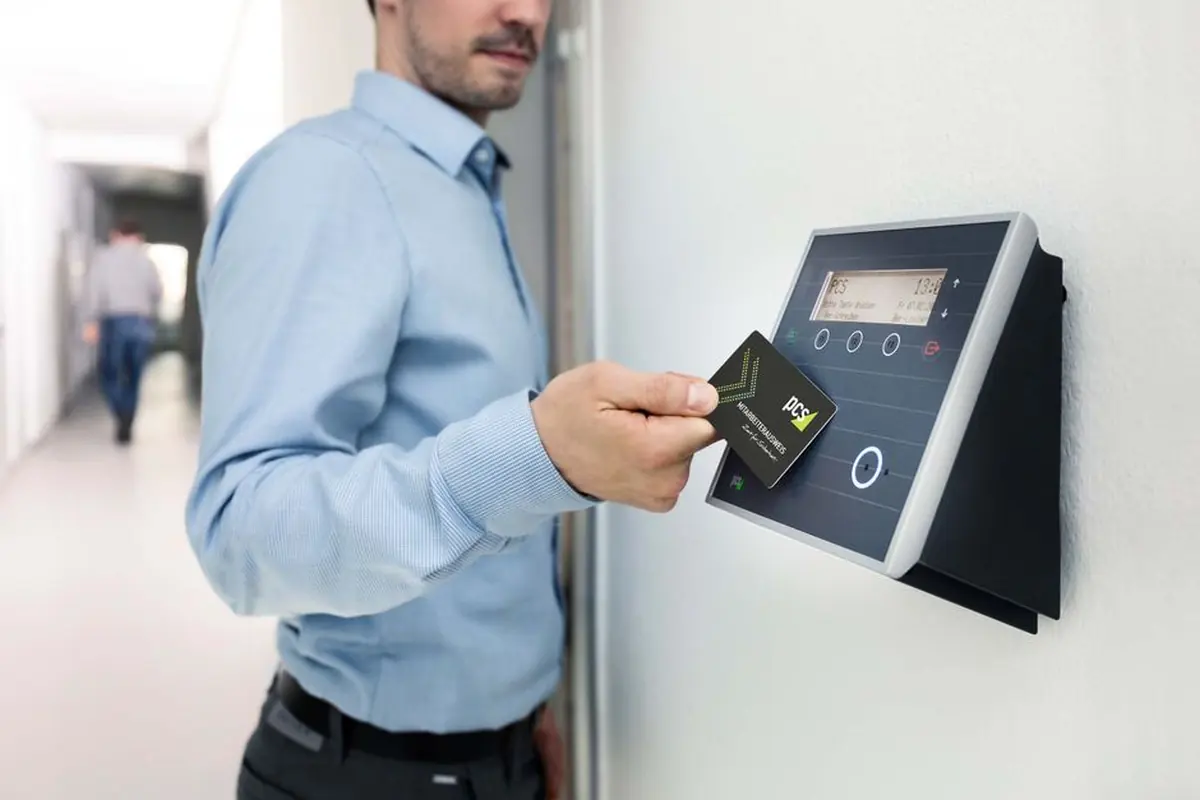
Three sites, three different briefs
| Office with fixed hours | Shift-based production | Multiple properties | |
|---|---|---|---|
| What is monitored | Arrival, departure, break, home office. | Shifts, overtime, night work, weekends, allowances. | Who is where and where they are authorised to go across buildings. |
| Identification | Chip or card, or alternatively a mobile phone. | Chip resistant to wear and tear; contactless operation through gloves at a greater distance. | One card for all properties. |
| Where things get stuck | Forgotten beeps and their repairs. | Rules for shift allowances and roster rotation. | Authorisations that nobody maintains. |
| What is included in payroll | Hours worked and absences. | Hours broken down by rates and surcharges. | The same, consolidated for the entire company. |
What we supply
- Operational analysis and proposal for terminal and reader placement, including areas where reading is not required.
- Hardware: attendance terminals, door readers, electric and motorised locks, power supplies and cabling.
- Rule configuration: shifts, breaks, overtime, allowances, approval workflow for repairs.
- Authorisation by department and role, including areas with restricted access.
- Connection to payroll software so that data does not need to be re-entered manually.
- Training for HR personnel and system administrators, along with handover of documentation.
- Service, expansion with additional doors and chip replacements during operation.
A system that monitors doors but fails to provide usable data for payroll solves only half the problem at full cost. That is why we integrate payroll connectivity into the initial design, not as an add-on.
What is often underestimated
- Door status. An electric lock can be installed in an hour at one location, while elsewhere the hardware needs milling or the entire door must be replaced. This can only be determined during an inspection, not from a photo.
- What happens in the event of a power outage. Escape routes are subject to fire regulations and doors must be openable. This is addressed by selecting the appropriate lock and providing backup access, not after the building inspection.
- Who will manage the system. Creating user records, assigning permissions and approving repairs is routine administration. If not assigned to a specific person, the system will diverge from reality within a year.
- Biometrics and GDPR. Fingerprint is a special category of personal data. It makes sense where chips are actually borrowed, not as the default option.